


Truth & Reconciliation
Engineers and Geoscientists BC is mandated under the Professional Governance Act (PGA) to establish, monitor, and enforce standards of professional practice. As part of this responsibility, Engineers and Geoscientists BC is required to act in ways that support reconciliation with Indigenous peoples.
The Office of Professional Governance (OSPG) Standards of Good Regulation emphasize that effective regulation must be fair, transparent, inclusive, and aligned with broader public interest. Advancing Truth and Reconciliation is an essential part of meeting these standards. It is a regulatory requirement to build trust and credibility in the professions we oversee and to advance reconciliation with Indigenous Peoples.
This commitment is also reflected in our current Strategic Plan, where Truth and Reconciliation efforts are embedded within our social responsibility pillar. By advancing this work, we intend to demonstrate accountability to our mandate and our shared responsibility towards reconciliation.
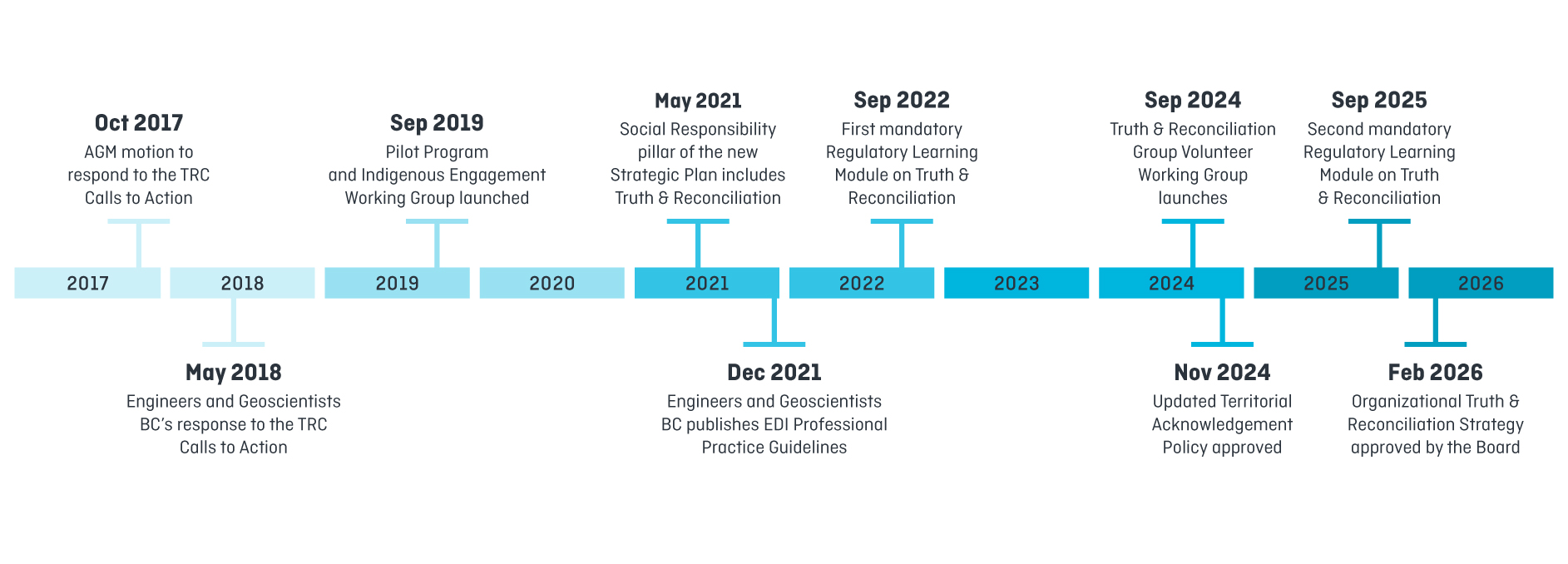
Our Organizational Journey So Far
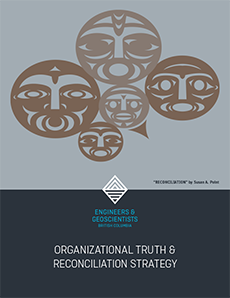
Organizational Truth and Reconciliation Strategy
Engineers and Geoscientists BC has developed it’s first Truth and Reconciliation Strategy to advance reconciliation as a core part of how we regulate and operate. The Strategy outlines how we will embed reconciliation into our culture, regulatory work, and day-to-day operations, guided by the 5Rs of Indigenous Values (Kirkness & Barnhardt; Restoule’s adaptation): Respect, Reciprocity, Relevance, Responsibility, and Relationships.
Truth and Reconciliation Strategy Development
The Truth and Reconciliation Strategy was developed through a comprehensive and intentional process, grounded in listening, learning, and relationship-building. Engineers and Geoscientists BC engaged Porttris Consulting Group, an Indigenous consulting firm, who guided this process with knowledge, care, and cultural integrity.
The strategy development included an extensive consultation phase through which we actively engaged with over 30 organizations and groups across six sectors – Indigenous Nations and organizations, government bodies, industry partners (firms), academia, other regulators, and registrants.
A summary of what we heard through this consultation process is available in our What We Heard - Summary. And a full list of the organizations and groups consulted is available in our Truth & Reconciliation Strategy Consultation List.
Strategy Implementation
The Truth and Reconciliation Strategy will be implemented in a phased and interactive manner, informed by continued listening, learning, and engagement. Initial efforts will focus on developing an action plan and sequencing priorities. A measurement and reporting framework will also be developed to support transparency and track progress over time.
Support for Registrants and Firms
Engineers and Geoscientists BC is committed to supporting registrants and firms in advancing reconciliation within their professional practice. We recognize that registrants and firms are at different stages of this journey, and we will continue to share resources to support this journey.
Professional Practice Guidelines
Professional engineers and geoscientists have a responsibility to understand that they often lead, work on, and support projects that have considerable impact on the environment and Indigenous communities, which often add to the hardships and safety concerns of Indigenous people, particularly Indigenous women and girls, as well as having cumulative effects on their Territories.
Professional Practice Guidelines related to Truth and Reconciliation include:
- Equity, Diversity, and Inclusion Professional Practice Guidelines
- Guidelines on Indigenous Consultation and Engagement
- Geotechnical Engineering Services for Building Projects
- Site Characterization for Dam Foundations in BC
Resource List by Truth and Reconciliation Volunteer Working Group
Engineers and Geoscientists BC EDIT&R Truth and Reconciliation Group has developed Truth and Reconciliation Resource List that supports registrants, firms, and members of the public in progressing on their Truth and Reconciliation journeys. The resources include learning modules, videos, Territorial Acknowledgement tools, podcasts, articles, and books.
Continuing Education Opportunities
We recognize that individuals are at different stages in their learning journey towards Truth and Reconciliation. To support this, we provide a range of continuing education opportunities that are intended to help registrants deepen their understanding and strengthen their professional responsibility in this area. This includes optional and mandatory learning sessions that are part of the Continuing Education Program requirements. Many opportunities are available on-demand, so registrants can learn anytime, anywhere. For resources to support your Truth and Reconciliation journey, see our webinars listed below, or visit our Knowledge Centre.
-
View On-Demand Webinars (click to expand)
(New) Mandatory Regulatory Learning Module for 2025-2026
This self-paced online course focuses on increasing awareness of Indigenous Peoples, histories, and the ongoing impacts of colonization. It aims to support registrants in building respectful relationships, enhancing cultural understanding, and contributing meaningfully to reconciliation.
Mandatory Regulatory Learning Module for 2022–2023
This self-paced online course is focused on truth and reconciliation with Indigenous Peoples and what reconciliation means for engineering and geoscience professionals working in BC. The module also provides basic foundational information about the history of Indigenous peoples and their communities in Canada and the impacts that continue to persist into the present.
4 Seasons of Reconciliation – Indigenous Awareness Learning
This self-paced online course promotes a renewed relationship between Indigenous Peoples and Canadians through transformative learning about truth and reconciliation. Each short module can be completed at the learner’s pace and provides a mix of learning tools such as slideshows, videos, films, and quizzes.
Indigenous Peoples, Collaboration, and Projects
This webinar demonstrates ways to work collaboratively with Indigenous Peoples and their communities. Facilitators will share examples that show the rapid, changing environment of Indigenous inclusion with modern projects.
Land Acknowledgments for Engineers and Geoscientists
Explore the practice of acknowledging First Peoples and traditional land as a way to open meetings but also as part of a larger process towards reconciliation between non-Indigenous and Indigenous Peoples in Canada, with a panel of Indigenous engineers and geoscientists.
An Introduction to the United Nations Declaration on the Rights of Indigenous Peoples
This webinar provides an introduction to the United Nations Declaration on the Rights of Indigenous Peoples (the Declaration) that was passed by the UN General Assembly in 2007. It will address efforts to make the Declaration law in Canada.
The Value of Indigenous Engagement on Engineering and Geoscience Projects
This session will teach best practices for collaboration with Indigenous communities when working on engineering and geoscience projects on Indigenous land. The session will take a practical approach by assessing a hypothetical project from both the technical and First Nations perspective, and will finish with a panel of experts sharing their experiences.
Equity, Diversity, and Inclusion Professional Practice Guidelines
This webinar introduces topics within the Engineers and Geoscientists BC Professional Practice Guidelines – Equity, Diversity, and Inclusion. These guidelines were first published in 2016 under the title Human Rights and Diversity Practice Guidelines and have since been updated to reflect the new requirements of the Professional Governance Act (PGA), and recent societal shifts in awareness and understanding of issues related to Equity, Diversity, and Inclusion (EDI).
Learn More
- Read the Truth and Reconciliation Committee of Canada’s full report: “Truth and Reconciliation Commission of Canada: Calls to Action.”
- Visit Canada’s Truth and Reconciliation Commission website.
- Read more about our early journey in Truth and Reconciliation.
Contact
If you have any questions or feedback about Engineers and Geoscientists BC's Truth and Reconciliation work, please email [email protected].