



107th AGM Highlights Regulatory Progress; Two Registrant Motions Debated
Posted on November 2, 2026
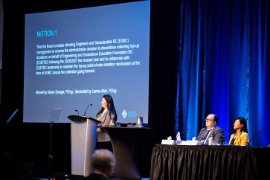
CEO Heidi Yang, P.Eng., reported that the organization processed more than 6,900 application decisions in 2025/2026, 1,200 more than the previous year, and published 21 registration policies. The organization also opened 115 investigation files, concluded 25 cases with disciplinary outcomes, and resolved 489 enforcement files involving unauthorized practice and use of title. Ninety-three percent of registrants completed their continuing education requirements on time.
Other work included advancing a climate change strategy, receiving Board approval for a Truth and Reconciliation strategy, formalizing a registrant feedback collection strategy, launching a public awareness campaign, and finalizing a set of Regulatory Principles. The organization also published practice resources on metal leaching and acid rock drainage, landslide mapping, and letters of assurance.
Yang reported revenue of $35.1 million and expenses of $34.5 million. A planned $370,000 deficit for the fiscal year ending June 30, 2027, will be covered by previous years’ surpluses.
During the question-and-answer period, registrants raised issues including fraudulent use of seals. Chief Regulatory Officer Jason Ong said work is underway with national partners to better protect physical and digital seals.
Other questions touched on investigations and discipline, the winding down of the Designated Structural Engineer Program, and spending on Environmental, Social, and Governance (ESG) and Truth and Reconciliation (T&R) initiatives.
Registrants also approved two non-binding, advisory motions for the Board’s consideration. The first asked the Board to consider maintaining the collection of top-up donations for the Engineering and Geoscience Education Foundation BC during annual fee renewal. It passed 225–51. Supporters emphasized the mechanism’s importance to funding the Foundation’s administration and scholarships.
The second motion asked the Board to consider measures to increase participation in Board elections and support more representative outcomes. It passed 208–77. Voter participation declined from 5,550 votes, or 14 percent, in 2022 to 4,356 votes, or nine percent, in 2026. Speakers debated whether administrative changes or amendments to the Professional Governance Act would better address the issue.
Photo: Wendy D Photography